Sports
Brandon McNulty returns the United States to the top of the world after 33 years
2026 Cycling Championships in Montreal
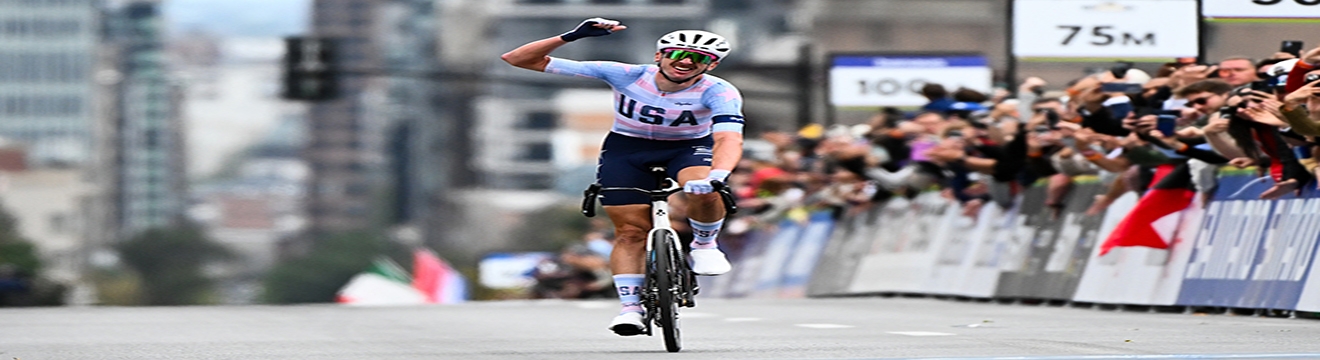
(Source: International Cycling Union (UCI))
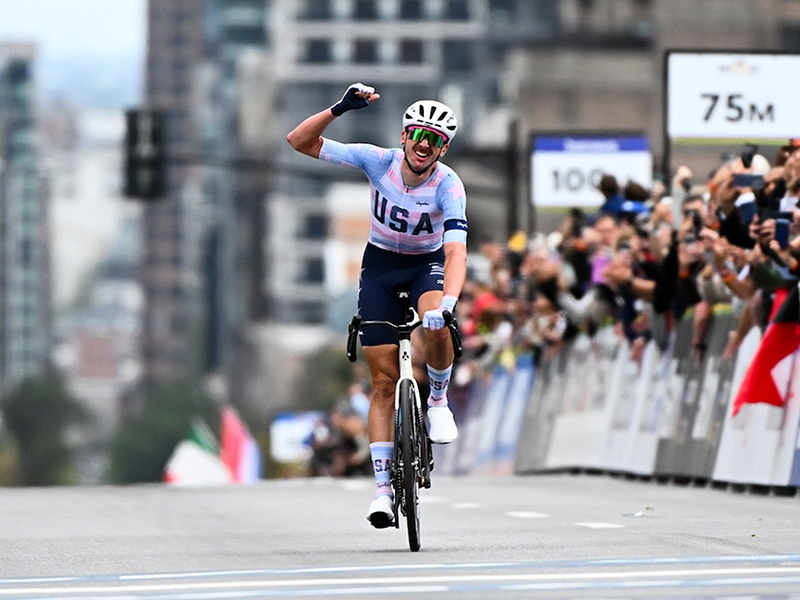
American cycling returned to the pinnacle of the sport on Sunday in Montreal as Brandon McNulty claimed the UCI Road World Championships Elite Men's Road Race title with a masterclass of tactical intelligence, endurance, and determination, capturing the coveted rainbow jersey in spectacular fashion.
Thirty-three years after the last American victory in the sport's premier road race, McNulty ended a historic drought by triumphing over a demanding 273.4-kilometer course featuring more than 3,800 meters of climbing. The Phoenix, Arizona native crossed the finish line 13 seconds ahead of Australia's Michael Matthews and the Netherlands' Mathieu van der Poel, completing a daring solo attack launched 33 kilometers from the finish that survived the pursuit of some of the world's strongest riders.
Thirty-three years after the last American victory in the sport's premier road race, McNulty ended a historic drought by triumphing over a demanding 273.4-kilometer course featuring more than 3,800 meters of climbing. The Phoenix, Arizona native crossed the finish line 13 seconds ahead of Australia's Michael Matthews and the Netherlands' Mathieu van der Poel, completing a daring solo attack launched 33 kilometers from the finish that survived the pursuit of some of the world's strongest riders.
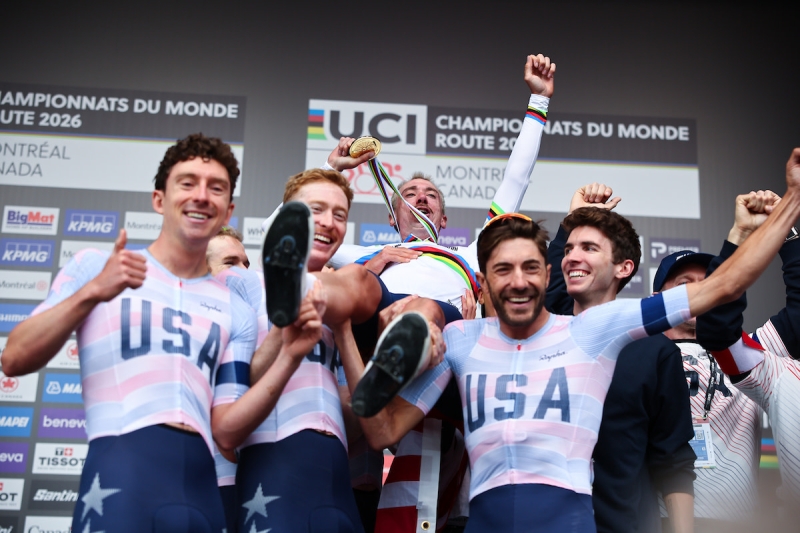
The victory was not merely an individual achievement. It was the result of a flawless team performance by the United States national squad, which arrived in Montreal believing it could contend for the world title and ultimately placed three riders inside the top ten.
"We've been saying for weeks that we had an incredibly strong team and that it was possible," McNulty said after pulling on the rainbow jersey. "We raced unbelievably well, controlled everything, had riders in all the key moves. Honestly, I'm speechless."
The race began with a large 16-rider breakaway that built an advantage of more than eight minutes over the peloton. Among the riders involved were well-known names such as Guillaume Boivin, Biniam Girmay, and Andreas Leknessund. As the race entered the demanding Mont-Royal circuit, which riders would tackle twelve times, the course gradually began to separate the strongest contenders from the rest.
"We've been saying for weeks that we had an incredibly strong team and that it was possible," McNulty said after pulling on the rainbow jersey. "We raced unbelievably well, controlled everything, had riders in all the key moves. Honestly, I'm speechless."
The race began with a large 16-rider breakaway that built an advantage of more than eight minutes over the peloton. Among the riders involved were well-known names such as Guillaume Boivin, Biniam Girmay, and Andreas Leknessund. As the race entered the demanding Mont-Royal circuit, which riders would tackle twelve times, the course gradually began to separate the strongest contenders from the rest.
France increased the pace during the early laps to support the ambitions of Paul Seixas, and the aggressive tempo soon fractured the peloton. A relentless series of attacks followed, featuring many of the sport's biggest stars, including Mathieu van der Poel, Wout van Aert, Primoz Roglic, Tom Pidcock, Remco Evenepoel, and Isaac del Toro in a tactical battle that kept the outcome uncertain throughout the day.
The United States responded immediately. Quinn Simmons inserted himself into several of the most dangerous moves, particularly when Van der Poel launched an attack that formed an elite lead group alongside Britain's Oscar Onley and later Roglic. Simmons' presence at the front proved crucial, helping neutralize threats while allowing his teammates to conserve energy.
The United States responded immediately. Quinn Simmons inserted himself into several of the most dangerous moves, particularly when Van der Poel launched an attack that formed an elite lead group alongside Britain's Oscar Onley and later Roglic. Simmons' presence at the front proved crucial, helping neutralize threats while allowing his teammates to conserve energy.
As the race continued to split apart behind, McNulty patiently waited for his opportunity.
The American found it with 32 kilometers remaining and delivered an acceleration worthy of a world-class time trial specialist. His advantage quickly grew beyond one minute with two laps still remaining.
Behind him, the chase was as intense as it was disorganized.
The constant attacks among the favorites prevented any effective collaboration. Evenepoel repeatedly attempted to ignite the pursuit, while Van der Poel, Mauro Schmid, and Pidcock searched for a way back to the leader. Each move, however, was met by Matteo Jorgenson, whose marking efforts played a decisive role in protecting his teammate's advantage.
The American found it with 32 kilometers remaining and delivered an acceleration worthy of a world-class time trial specialist. His advantage quickly grew beyond one minute with two laps still remaining.
Behind him, the chase was as intense as it was disorganized.
The constant attacks among the favorites prevented any effective collaboration. Evenepoel repeatedly attempted to ignite the pursuit, while Van der Poel, Mauro Schmid, and Pidcock searched for a way back to the leader. Each move, however, was met by Matteo Jorgenson, whose marking efforts played a decisive role in protecting his teammate's advantage.
The gap shrank dangerously during the final lap. After cresting the demanding Voie Camillien-Houde climb, McNulty held only a ten-second advantage. Yet the UAE Team Emirates-XRG rider remained composed, managed his effort with the precision of an accomplished time trialist, and maintained enough of a cushion to reach the finish line alone.
"Even with 300 meters to go, I still didn't believe it," McNulty said. "I was completely empty. On the final climb I was on the limit, but I kept pushing. This morning I told my wife something special might happen, even though it would take a miracle. And today, the miracles happened."
The American performance was one of the defining stories of the championship. In addition to McNulty's victory, Simmons delivered an outstanding fourth-place finish, while Jorgenson placed eighth after playing a critical tactical role during the final kilometers. Riley Sheehan finished 48th and Larry Warbasse was 57th, while Kevin Vermaerke, Artem Shmidt, and Sean Quinn were unable to finish the race.
"Even with 300 meters to go, I still didn't believe it," McNulty said. "I was completely empty. On the final climb I was on the limit, but I kept pushing. This morning I told my wife something special might happen, even though it would take a miracle. And today, the miracles happened."
The American performance was one of the defining stories of the championship. In addition to McNulty's victory, Simmons delivered an outstanding fourth-place finish, while Jorgenson placed eighth after playing a critical tactical role during the final kilometers. Riley Sheehan finished 48th and Larry Warbasse was 57th, while Kevin Vermaerke, Artem Shmidt, and Sean Quinn were unable to finish the race.
For Jorgenson, the success was the result of a strategy developed the night before.
"We put our egos aside and decided that the only thing that mattered was having an American win the World Championship," Jorgenson said. "We rode a perfect race. Quinn covered the dangerous moves, Brandon attacked at exactly the right moment, and once things settled down, he was able to go solo while we protected his advantage."
The victory in Montreal also represents a symbolic milestone in McNulty's career. Exactly ten years after winning the Junior Men's Time Trial World Championship in 2016, the Arizona rider has now secured the most prestigious title in road cycling and become the first American man to wear the elite world champion's rainbow jersey since 1993.
On a day defined by tactical aggression, a brutally demanding course, and the presence of many of the sport's biggest stars, the United States did not simply find the strongest rider. It found a team capable of executing a perfect race plan and returning the nation to the summit of world cycling.
"We put our egos aside and decided that the only thing that mattered was having an American win the World Championship," Jorgenson said. "We rode a perfect race. Quinn covered the dangerous moves, Brandon attacked at exactly the right moment, and once things settled down, he was able to go solo while we protected his advantage."
The victory in Montreal also represents a symbolic milestone in McNulty's career. Exactly ten years after winning the Junior Men's Time Trial World Championship in 2016, the Arizona rider has now secured the most prestigious title in road cycling and become the first American man to wear the elite world champion's rainbow jersey since 1993.
On a day defined by tactical aggression, a brutally demanding course, and the presence of many of the sport's biggest stars, the United States did not simply find the strongest rider. It found a team capable of executing a perfect race plan and returning the nation to the summit of world cycling.
Final Classification
Brandon McNulty (United States) – 6:17:04Michael Matthews (Australia) +13 seconds
Mathieu van der Poel (Netherlands) +13 seconds
Quinn Simmons (United States) +13 seconds
Matteo Jorgenson (United States) +14 seconds
Thirty-three years later, the rainbow jersey once again belongs to an American rider. In Montreal, Brandon McNulty was the man who made history and brought the United States back to the top of the cycling world.
Source: International Cycling Union
Liability for this article lies with the author, who also holds the copyright. Editorial content from USPA may be quoted on other websites as long as the quote comprises no more than 5% of the entire text, is marked as such and the source is named (via hyperlink).